Clinical Research Courses Give a Big Picture of Clinical Studies

An Introduction to Clinical Research Studies

 In the present days, the clinical research organizations carry out several clinical trials to find various solutions to life-threatening diseases.  For that reason, clinical research courses have been designed by clinical research training institutes. Clinical studies are nothing but research that comprises of several human volunteers and is used to expand medical knowledge in the industry.  This article will give aspiring clinical research professionals in-depth knowledge on clinical research studies

One has gained knowledge on what clinical research studies are. It’s important to determine why clinical research studies are needed in the industry.

The Need for Clinical Trials in the Industry

 Clinical research courses also show professionals how clinical research studies are important to their industry. Following are some of the common reasons:

  1. They evaluate various drugs, medical devices and surgeries that cure an illness, syndrome or condition.
  2.  Discover ways to prevent diseases from occurring as well as halting the recurrence of illnesses in humans. It can be done through medicines or vaccines.
  3. Assessing a few drugs, medical devices or treatment methods that detect diseases.
  4. Probing the methods that are used to identify a disease or condition
  5. Search for methods to enhance the health and lifespan of those patients who have a chronic disease through supportive care.

https://www.technobridge.in/clinical-research-course.html

Clinical Research Courses Help You Know About The Protocol

Mostly, Clinical research studies are conducted in accordance with a research plan. This protocol is designed such that it can find particular answers to research questions and safeguard the health of participants. A study protocol has the following information:

– Why the particular study is being conducted?

– Who is eligible to participate in the industry?

– The number of participants needed in an industry

– The full schedule of the trial which includes the tests, procedures and dosages

– The duration of the study

– The information to be collected from the participants.

https://www.technobridge.in/

What is The 2020 Road Map for Full Stack Development?

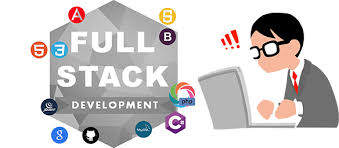
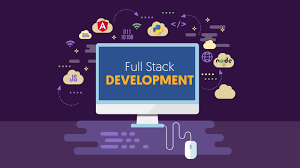
A full stack developer is known as a all round developer because they can build the web application from scratch, They usually know front-end, back end and database management technologies to build the application. For this reason, they need to lean a wide range of skills to build a variety of websites and applications. This article will give you a summary of technologies that one would need to become a full stack developer in 2020.

The Basics of Full Stack Development

Students will usually start their learning path with HTML and CSS. HTML and CSS is usually the foundation of every website and application.

HTML & CSS

HTML stands for Hyper Text Markup Language and is used to structure the content of the website with simple markup syntax. On the other hand, Cascading Style Sheets (CSS) aids developers to add styling to their websites with the help of fonts, colors and layouts. HTML and CSS were essentialities for developers in the year 2020 and will continue to do so in 2020. Therefore, these essentialities are included in a full stack developer course

Programming Languages

Among the programming languages, a full stack developer needs to know JavaScript

JavaScript

JavaScript is the pillar of any website and is vital for adding diverse elements to a website. HTML and CSS cannot be implemented on a website without using JavaScript.  For that reason, it is essential to learn JavaScript in order to start a web development career. In addition to this, JavaScript is also necessary for the front-end namely Angular and back end namely NodeJs. One can learn JavaScript in a full stack developer course.

Front End Frameworks

Angular

Angular in simple words is a framework for creating client applications in HTML and JavaScript. This framework merges declarative templates, end to end tooling and integrated best practices to resolve several challenges of development. Angular was a popular framework in 2019 and will be one in 2020 too.  Angular training is an integral part of a full stack developer course.

https://www.technobridge.in/full-stack-developer-course.html

Back-End Frameworks

Python

Python is known to be among the best programming languages and frameworks amongst companies in 2019. One should learn this technology if it is not present in their skill set yet.  Python will help developers to execute command line scripts and web applications.  In the present scenario, Python is known to power scientific computing. Python is an essentiality in a full stack developer course.

After learning front end, back end and programming languages, one should have knowledge of server-side renderings.

Server-Side Renderings

Server-side renderings  is the process of setting  up  and rendering the result of a web page on the server and then delivering the final result to the browser, These server side  renderings are highly beneficial as they  minimize the processing required on the client side and  hence make client applications fast. Therefore, a full stack developer course teaches one server side-rendering.

To summarize, a full stack developer needs to have a wide range of skill sets in order to develop websites or applications. For that reason, one needs to enroll in a course. TechnoBridge is the best full stack developer training institute in Pune.

Why Should One Become a Full Stack Developer?

A full stack developer is said to be one who works on the front-end as well as the back-end technologies of a website or application. To make it simple, a full stack developer is one who works on technologies across several domains. To exemplify,   a web developer will use many technologies in developing a website. On the other hand, a mobile developer will work with many technologies in mobile development.   A full stack developer course teaches students many technologies. This article gives you the reasons why you should become a full stack developer.

After understanding what is a full stack developer, let’s move on to why one should be a full stack developer.

The Reasons to Become a Full Stack Developer

If one asks many professionals if they should be full stack developers, you will not get a universal answer. On one hand, a few are of the opinion that becoming a full stack developer is a waste and one should only concentrate on one technology. On the other hand, some people say that it is better to become a full stack developer instead of being an expert in one technology. You could find out more in a full stack developer course.  Given below are the reasons to be a full stack developer:

The Rate of Employment of Full Stack Developers is High

In the present times, the employability rate of full stack developers is on an increasing curve. They prefer such developers because they can carry out more than one role. When companies hire such developers, they also save their budget. You can get several opportunities after a full stack developer course.

https://www.technobridge.in/full-stack-developer-course.html

The Project is More Organized

Companies benefit from hiring full stack developers because they will be the only person handling the product. Suppose, if they had several developers working on a single project, each developer would be working on different components. This would make the project a little disorganized. Furthermore, there would be difference in opinions among many developers.

Flexibility

Full stack developers are hired by several IT companies because of their flexibility to work across several projects. They can work across numerous apps and move from one process to another. Apart from this, they can work with those technologies which do not fall in that domain.

To be the one in demand, enquire about a full stack developer course now!

How Can One Become a Full Stack Developer?

After going through the reasons to become a full stack developer, one would get questions on how to become a full stack developer? The only answer to that is to enroll in a full stack developer course. After this course, you could begin a successful career in full stack development.

For More info: https://www.technobridge.in/

A Full Stack Developer Course Helps Advance Your Skills

The Need of Full Stack Development Skills

If organizations need to create presentable and attractive websites, they need to have excellent developers.  They also have a role in bringing more traffic to a website and staying ahead of competitors. A full stack developer course helps one to advance skills and build the best websites. They also help students to determine the technologies and frameworks that need to be known by a full stack developer .Finally you get to know what are the skills that you are lacking to be a developer. This article tells you how a full stack developer course can help you be an excellent full stack developer.

The Skills Required by a Front End Developer

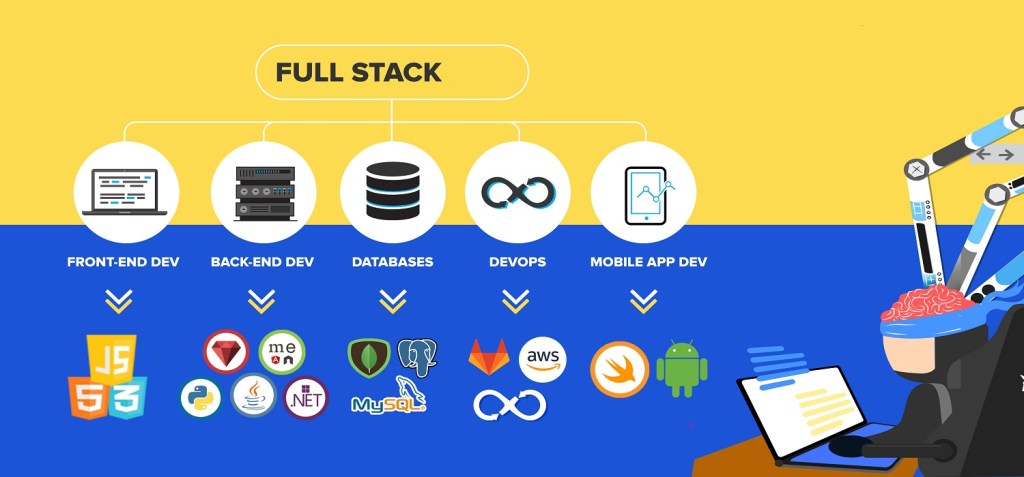
A front end developer creates each component of the website that can be interacted with by the users. It includes drop down menus and sliders which use HTML, CSS and JavaScript. A full stack developer course would help one be proficient at these three languages. Furthermore, they would help one get familiar with frameworks such as Bootstrap, AngularJS as well as libraries like JQuery.  They also need to be proficient in Ajax. A full stack developer course helps one to gain experience in these languages, frameworks and libraries.

https://www.technobridge.in/full-stack-developer-course.html

The Skills Required by a Back-End Developer

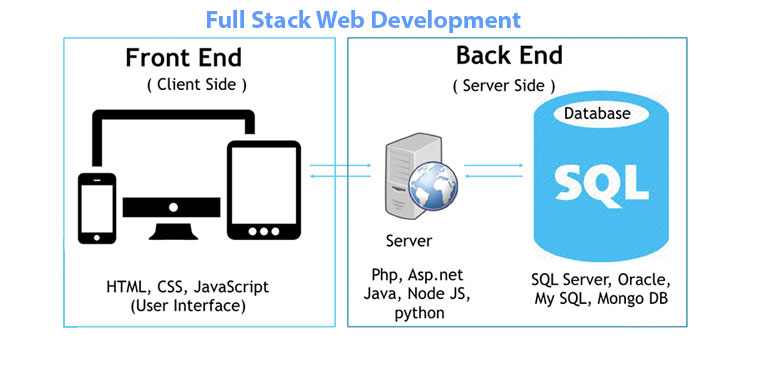
The back end developer is responsible for the data stored on a website.  The back end consists of a server, an application and database.  The main responsibility of a back end developer is to create and maintain the technology which fuels the server, application and database and power the user-facing side of the website. A full stack developer course helps you advance skills for this role. Back end developers use different server side languages and tools. They need to know languages such as PHP and Python as well as tools like MySQL Oracle and SQL Server.

Skills Required by a Full Stack Developer

A full stack developer is one who can work on the entire stack of technology namely the front end and the back end. They should have knowledge of both front-end as well as back end technologies. A full stack developer course prepares them to work like a back end developer as well as create the structure of a website. Furthermore, they also should have knowledge on the functioning of each layer of the web. Finally, they identify the front end and back-end responsibilities of a solution as well as convey the pros and cons of these solutions.

To summarize, a full stack developer course advances one’s skills in the development industry.

https://www.technobridge.in/

A Full Stack Developer Course Gives You The Relevant Skill-Set For The Industry

An Introduction to a Full Stack Developer

 A full-stack developer is someone who can work on a complete web application from the beginning to the finish.  For that reason, a full stack developer course teaches the student the full-stack development   that is front-end, back end and database. That means that they start to learn the client-side technologies as well as the server-side technologies. This article would inform one on what skills are taught in a full-stack developer course.

The need for a Full-Stack Developer

There are three reasons why a full-stack developer is recruited by a company. For that reason, a full stack developer course gives the candidate the adequate qualification and experience. They are:

  • A Full-stack developer maintains each part of the system in working condition
  • A  Full Stack developer not only assists people in his or her team but also ensures team communication is cost-effective and time-effective
  • The developer  minimizes infrastructure and operational costs by working on diverse technologies

Therefore, a full stack developer course prepares an individual for a challenging career in full stack development.

https://www.technobridge.in/full-stack-developer-course.html

Skill-Set Required by a Full-Stack Developer

 There are seven key skills required by a full-stack developer to carry out their daily responsibilities. They are:

  1. Front end technologies

The first skill that would be required by a full-stack developer is front end technologies which include HTML5, CSS3, and JavaScript.  In addition to that, they benefit if they have knowledge of JQuery, Angular and ReactJS. A full stack developer course gives one the knowledge of front-end technologies and third party libraries.

  • Back end Technologies

The second skill is that of back end technologies which are nor visible to the client on the website.  Python and PHP are included in the server side technologies and are used to build the ‘behind the hood’ part of the website.  A full stack developer course teaches one the back-end technologies.

  • Database and cache

 A full stack developer should have knowledge of   diverse database management systems. They use systems such as MySQL, Oracle, and SQLServer. If a developer has knowledge of caching mechanisms like varnish, Memcached and Redis, it would be a plus point for them. A full stack developer course teaches them these frameworks.

  •  Basic design ability

One needs to have the knowledge of design to have a full stack developer. Furthermore, the person should have knowledge of fundamental UI /UX design.

  •  Server

Exposure to handling Apache or Nginx servers is desirable. A good background in Linux helps tremendously in administering servers. A full stack developer course gives them the experience of handling servers.

  • Version control system (VCS)

A version control system allows full stack developers to oversee the changes made in the code.  They learn get in order to fix and make changes in others codes without breaking them. A full stack developer course helps in coding.

  • API’s such as  REST & SOAP

It is necessary for full stack developers to have the knowledge of web services or API for full stack developers. If they have the knowledge of creations and consumption of REST and SOAP services, it is a plus point. A full stack developer course gives them the knowledge of API’s.

To summarize, a full stack developer course gives the required skill-set for developers to survive in the industry.

https://www.technobridge.in/

Full Stack Developer Course | Become a Qualified Professional

The need for full stack development

There is a need to pursue a full stack developer course in the present scenario. Full Stack Web Development is the development of both front end and back end of a web application. The web development process comprises three layers namely the back end, front end of the application and the database .It would be expensive to hire various experts who work on multiple stacks of web development. Furthermore, a company has limited budgets and cannot spend much on resources. Therefore, nowadays companies demand full stack developers who have knowledge of diverse various technologies and can work across multiple stacks. A full stack developer course prepares you for the industry

Who is a Full stack developer?

A Full Stack Web Developer is a developer who can work on both ends of the web development process, i.e., front end and back end.  For this reason, one needs to enroll in a full stack developer course. These full-stack developers execute the following tasks:

  • Writing optimized front-end code in Java, HTML and JavaScript.
  • Extensive knowledge of system’s infrastructure such as hardware and OS.
  • Creating custom APIs and writing backend code in Python, and PHP.
  • Client Communication and Project Management Skills.
  • Creating and querying databases.

https://www.technobridge.in/full-stack-developer-course.html

A full stack developer can build a web application right from the scratch. It is quite difficult to gather and possess these skills and that is the reason knowledge of why full stack web developers are hugely in-demand in the industry. A full stack developer course will give professionals these skills.

The demand for Full Stack Developers

 Several IT training institutes have structured a full stack developer course because they are in high-demand. Full Stack Developers are in high demand because companies prefer them to developers who are only specialized in one layer of the technology stack. One of the reasons that have led to the high demand of full stack web development professionals is the evolving technologies. Since full stack developers have an advanced skill-set, they are familiar with the latest technology. Furthermore, full stack developers are able to create a web application from scratch in little times. They could help to finish projects which need to be finished quickly.  Their contribution to the industry has increased their demand. A full stack developer course prepares them for a challenging career.

Enroll in a Full Stack Developer Course

One should enroll in a full-stack developer course to gain knowledge on programming languages, front-end technologies, back-end technologies, database structures and algorithms as well as database management. Apart from that, you get to prepare yourself for the corporate world through mock interview sessions, group discussions and English language and communication sessions. A full stack developer course helps one pursue a successful career in full stack development.

https://www.technobridge.in/

A Full Stack Developer Course Opens the Door to Bright Career Prospects

Full Stack Developer Course

The Need for Full Stack Developers

 Full Stack Developers are those developers who have the skills to develop, test and set up a web application. They have extensive knowledge on several aspects of development namely front-end development, back-end development, database, and several operating systems. Recruiters in several companies prefer to hire full stack developers because they can develop any application from the beginning. Furthermore, they have a comprehensive understanding of all technologies.  Therefore, one must enroll in a full stack developer course to gain extensive knowledge of various technologies.

 The Fundamentals that are taught in a Full Stack Developer Course

 In the IT industry, the career of a full stack developer always starts with the basics of front end development such as HTML and CSS. These two technologies are the basic technologies that any full stack developer works with in his career. HTML is the basic of every website that are created by individuals’. HTML helps one organize the content of a website with simple markup syntax. On the other hand, Cascading Style Sheets (CSS) is a way of adding style to their websites. These are the different concepts covered in a full stack developer training program.

After learning the fundamentals during the commencement of a full stack developer course, the candidates learn various programming languages.

Programming Languages in a Full Stack Developer Course

During the full stack developer course, one starts with the fundamentals of the Javascript language. One will be able to learn advanced features too. Moving on, one will then learn Python language to execute command-line scripts and web applications. Also, this programming language is also used in scientific computing.

Later, one would later learn various front-end frameworks in a full stack developer course.

https://www.technobridge.in/full-stack-developer-course.html

Front-end Framework taught in a Full Stack Developer Course

One is taught Javascript because one needs a comprehensive understanding of various programming languages and basics before learning a frame work and its associated concepts.  After getting accustomed to a wide range of technologies, one will be able to work with different frameworks with ease. The first front end technology taught is Angular which is a framework that develops client applications in HTML and JavaScript.  The second is Nodejs which is used to implement the JavaScript at the back-end development. Therefore, one must enroll in a full stack developer course.

Back End Development in a Full Stack Developer Course

Back- End Development is also included in a full-stack developer course usually involves Python. Python is an object-oriented, high-level programming language primarily for web and app development. It is extremely attractive in the field of Rapid Application Development because it offers dynamic typing and dynamic binding options.  Therefore, Python is covered comprehensively in a full stack developer course.

https://www.technobridge.in/

To summarize, Full Stack Developers are in demand because of their comprehensive understanding of all technologies. Furthermore, they can develop and build a web application from scratch.  They have the knowledge of programming languages, front-end and back end technologies. Recruiters mostly recruit those candidates who have completed a full-stack developer program.  They are the ideal choice of recruiters because they are skilled in front-end development, back-end development as well as operating systems. Therefore, one must enroll in a full-stack developer course to expand their knowledge. After the completion of the full-stack training program from the best training institute, they will start a successful career in the industry.

Full Stack Developer Course Gives One an Ultimate Guide to Become a Full Stack Developer

Full Stack Developer Course
Full Stack Development

An Introduction to a Full -Stack developer

A Full Stack Developer is a developer who has extensive knowledge across a wide range of technologies and platforms. A Full stack developer course should be pursued by those who want to gain an entry into the booming IT industry. The reason being that, one requires adequate experience and knowledge of different concepts to be a full stack developer. A full- stack developer has skill-sets across two different fields’ namely front-end development and back-end development.

What is covered in Front-End Development in a Full Stack Developer Course?

Aspiring Full-stack Developers are taught how the website would look on different browsers as well as mobile devices to users. A front-end developer uses front –end development technologies such as HTML CSS and also the scripting language Java Script in order to draw potential leads to their website. Their main objective is to give a client the platform in which they give and receive information from a client.  They are usually experienced in web design and software such as Photoshop to create appealing layouts.  In addition to that, they possess user experience design and user interface design skills.

Back End Development Concepts covered in a Full Stack Developer Course

Back end development processes usually include several processes such as creation, editing, updating and recollection of data. For this reason, a full stack developer course teaches students different languages such as PHP and Python. Full stack developers use these scripting languages to create algorithms and business logic to manipulate the data that is received by front end developers. For this reason, a full stack developer must be able to write code to receive information from their users and save it in a database. There are two different types of database systems which are used in database management namely Post GRE SQL and MySQL.  Therefore, a Full Stack Developer Course teaches SQL to students so that they will be well-versed with how to interact with the database.

https://www.technobridge.in/full-stack-developer-course.html

Why one should become a Full-Stack Developer

Full Stack Developers should enroll in a full stack developer course and learnt the full spectrum of wed development because they are valuable to a team. Furthermore, recruiters prefer those candidates who are able to work on front-end development, back-end development, database and basic operating systems.  Therefore, one should enroll in a full stack developer training course.

How can one become a Full-Stack Developer

A full stack developer needs to have a comprehensive understanding of the whole spectrum. For that reason, one needs to enroll in a full stack developer course. One needs to first validate and verify whether a full stack developer training course gives their students features that are beneficial for them. Mostly, you need to check whether a full stack developer training institute gives you 100% written job guarantee, real projects, learning from industry experts and lifetime support.  The guidance from industry experts will help you start a career in the competitive IT industry.

To summarize, a full stack developer course gives students extensive knowledge of front-end and back end-development technologies. They get several job opportunities as recruiters prefer hiring one full stack developer over three different web developers.

https://www.technobridge.in/

Clinical Research Courses Prepares Professionals to Recruit Volunteers for Trials

Clinical Research Courses
Clinical Research

The need for volunteers in Clinical Trials

Many multinational companies are opening research centers in order to conduct novel research studies and clinical trials. For a clinical trial to be successful, professionals need to have several human volunteers who take part in these trials. These trials help clinical research professionals to find out the results of an experimental drug before its availability in the market. Furthermore, they help cure illnesses as well as enhance the quality of human life. Additionally, they find solutions to prevalent diseases such as diabetes and cancer. Clinical research courses give candidates extensive information on the industry

Challenges in Recruiting Professionals for Clinical Trials

In the present times, the clinical research industry has been conducting several clinical trials in order to find a solution to many diseases. However, recruitment of volunteers has been a challenge for professionals. Moreover, it has been become more challenging for professionals as they are either not able to meet the targets or even recruit a single volunteer for their trial. Therefore, clinical research courses prepare professionals for such challenging situations for their career.

Reasons for Less Participation in Clinical Trials

There could be several reasons for less participation of human volunteers in various clinical trials .Firstly; there is a lack of awareness among patients therefore resulting in lack of participation in clinical trials. This could also create a lot of losses to the clinical research industry as it could lead to a delay in study trials as well as higher overall costs in a trial. Secondly, there is less trust among clinical professionals and the volunteer. Thirdly, the site for the clinical trial may be too far for the volunteers. Therefore, clinical research professionals must find other ways to find volunteers for their clinical trials.

https://www.technobridge.in/clinical-research-course.html

Using social media to contact volunteers for various trails

One alternative which clinical research professionals could utilize in order to find more volunteers for their trials is social media. The reason being that, majority of the population is proactive on social media most of the time.  Although, social media should not be the only means to get in touch with volunteers. It could be an alternative which professionals can use to communicate with several volunteers.

 The benefits of social media marketing in clinical trials

Clinical research professionals get several benefits from using social media marketing as a recruitment tool. Furthermore, targeted social media advertisements have their advantages for clinical research professionals. Firstly, research staff can select the demographic of participants they are looking for, such as age, gender and location. Secondly, social media lets research staff to get in touch with and inform various healthcare providers as well. Thirdly, physicians could help research staff identify volunteers through information of a trial such as its objective and inclusion and exclusion criteria. Fourthly, it helps professionals to get an idea of the frequently asked questions of patients. Clinical research courses give students in-depth information on how to conduct a trial efficiently.

Some rules to be followed by clinical research professionals during a trial

Social media may be a great avenue for clinical research professionals to get in touch with potential volunteers. However, they must ensure that they do not reveal sensitive information which has been given to them by volunteers on social media. As a result of following this guideline, the dropout rates of volunteers will decrease over time.

To summarize, clinical research courses prepare their professionals to conduct efficient clinical trials.

https://www.technobridge.in/

Clinical Research Courses Help Professionals Gain a Complete Understanding of Clinical Research

Growing Demand for Clinical Research Professional

The Clinical Research field has a massive demand for trained clinical research professionals due to the huge gap between the demand and supply of qualified professionals. They are in demand due to the recent developments in research, presence of an aged population and prevalence of various diseases such as cancer and diabetes .Therefore the industry in in the lookout for professionals who can conduct clinical trials effectively from the beginning to the end.

The Need for Clinical Trials in the medical Sector

Clinical trials often referred to as clinical studies or more broadly as clinical research are research studies including human volunteers. Healthcare professionals conduct a wide range of clinical trials assess the safety and effectiveness of better ways to treat sick patients with chronic diseases .Moreover, these trials give healthcare professionals several insights into a disease and the treatment regime for these chronic cases. Therefore, Clinical trials are a vital part of the scientific research process and are essential to developing better treatments for people with illnesses.

Types of Clinical Trials

Clinical trials can be divided into 2 types. They are:

  1. Observational trials
  2. Interventional trials

Observational clinical trials

 These are trials that do not test drugs or treatments. In these types of trials, clinical research professionals are observed by monitoring their health over a period of time.  Therefore, these studies provide researchers with data that gives them an overall understanding of the disease and how the patient can be cured of the disease.

https://www.technobridge.in/clinical-research-course.html

Interventional clinical trials

 The main aim of interventional trials is to get more details about a particular intervention or treatment. Moreover, the people taking part in interventional trials are put into different treatment groups so that the research team can make a comparison of the results.

Sub Divisions of Clinical Trails

These broad categories are further classified into:

  1. Treatment trials:  These trials include test treatments, drug combinations or surgical approaches to relieve and slow down disease progression of people.
  1. Prevention trials: These include test approaches, medicines, vitamins, minerals, vaccines or lifestyle changes that may lower the risk of developing diseases.
  1. Screening Trials: These trails test ways to detect illnesses such as cancer in their early stages.
  1. Quality of Life trails: These trials discover ways to improve comfort and quality for patients who suffer from various illnesses.
  • Genetics Trials: They are trials that are designed to improve the ability to look for an inherited risk of diseases namely cancer and diabetes.

https://www.technobridge.in/

Phases of Clinical Trials

Clinical research trials are conducted in 4 phases to test the efficiency and safety of a drug, device and treatment regime

Phase I trials test a potential therapy, procedure or drug for the first time in human beings. The aim of healthcare professional during the first phase of clinical trials is to establish that a potential new treatment is safe for humans. For this reason, Phase I trials are typically conducted in very small groups of ten to eighty people.

Phase II involves trials that evaluate a treatment’s safety and effectiveness in a larger group of participants in a detailed manner. This phase usually includes a group of 100 to 300 people.

Phase III is usually conducted to confirm a therapy’s effectiveness, monitor side effects and  make a comparison among  a large group of people around thousand to three thousand in number . Besides that, the third phase is usually conducted at multiple centers and evaluate whether a treatment will benefit people with chronic diseases and if the benefits of a therapy outweigh the risks.

Phase IV known as the post marketing surveillance are conducted after a treatment has received approval and been introduced in the market. These trials help further evaluate long-term side effects and potential new uses for other conditions.

In order to gain more knowledge about these trials, individuals should enroll themselves in clinical research courses.

To conclude, the clinical trials process comprises an extensive amount of research that helps medical professionals in the advancement of drugs, devices and treatment regimes. For that, they need to undergo clinical research practical training programs to be capable to carry out their tasks as a clinical research professional. 

Design a site like this with WordPress.com
Get started